Third-party processing: when it is advantageous to outsource sheet metal processing
Third-party processing: when it is advantageous to outsource sheet metal processing
In today's industrial context, in addition to highly variable demand, companies must also contend with the increasing complexity of components and the associated cost pressures. For this reason, the choice between in-house production and outsourcing sheet metal processing has become increasingly strategic.
Today, therefore, third-party sheet metal processing is a well-established solution for many manufacturing companies, especially when they need to maintain production flexibility while having access to specialist skills and optimizing the use of internal resources.
It goes without saying, however, that industrial outsourcing is a choice that, in order to be effective, must meet specific technical, production, and organizational conditions.
What is meant by sheet metal processing for third parties
When we talk about sheet metal processing for third parties, we mean entrusting one or more stages of the production process to a specialized external partner with long-standing experience, such as Minifaber. These stages may include:
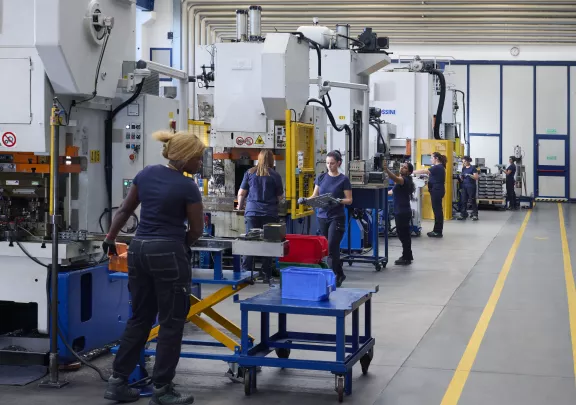
- cold metal stamping,
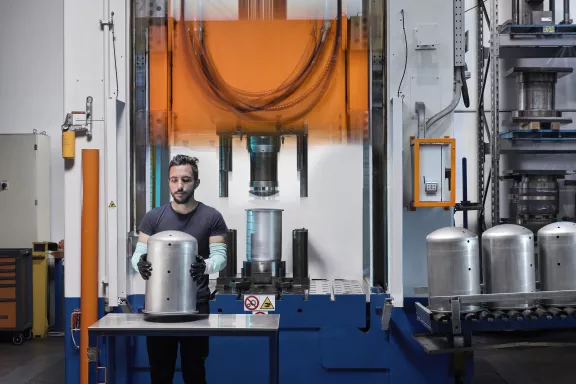
- shearing and deep drawing,
- progressive and transfer processing,
- production of semi-finished or finished components according to customer specifications.
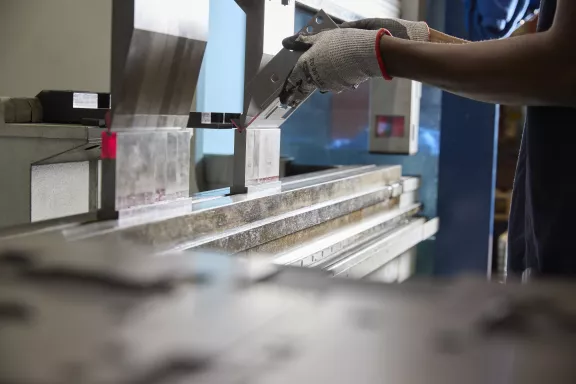
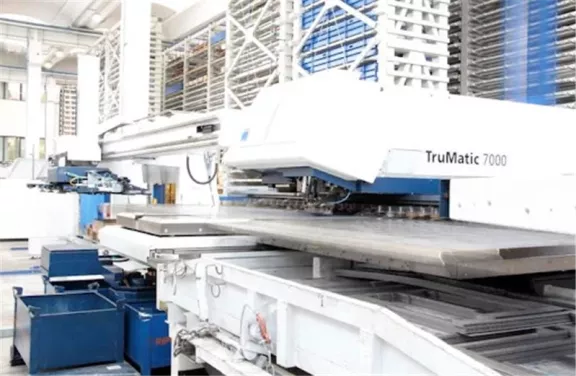
- Laser cutting, punching, bending
- Welding
The subcontractor operates on the basis of a technical drawing or a shared project, integrating itself into the production flow of the client company and complying with the dimensional, functional, and quality requirements defined upstream.
Why companies choose industrial outsourcing
Companies that choose outsourcing undoubtedly do so to reduce costs and gain expertise and professionalism, but also to optimize processes. In particular, they aim to achieve:
Production flexibility
Outsourcing allows production capacity to be quickly adapted to market changes, peaks in demand, or discontinuous production, without having to invest in new lines, machinery, or dedicated personnel.
Access to specialist skills
Some sheet metal working processes require advanced technical know-how, gained over time and difficult to replicate internally. Relying on a specialized partner means benefiting from:
- experience in mold design and stamping
- in-depth knowledge of materials
- welding knowledge and experience
- advanced control of process parameters.
Optimization of investments
Outsourcing allows you to avoid high investments in:
- mechanical and hydraulic presses,
- laser cutting, punching, and bending machines
- welding equipment and machinery
- maintenance and technological upgrades.
- Search for qualified and competent personnel
When it comes to complex processes or non-continuous production, all this becomes particularly relevant. Furthermore, outsourcing sheet metal processing allows companies to focus their resources and skills on activities of greater strategic value.
When it is advantageous to outsource sheet metal processing
Contract sheet metal processing is particularly advantageous when:
- production volumes do not justify a dedicated internal investment,
- the component requires advanced stamping technologies,
- high precision and repeatability are required,
- the product is subject to frequent design changes,
- industrialization times need to be reduced.
In these cases, the subcontractor becomes an integral part of the production process, contributing not only to the execution but also to the technical optimization of the component.
The role of the subcontractor in metalworking
A subcontractor specializing in sheet metal working is not limited to the mechanical execution of the piece, but plays a broader technical role, which includes:
- support during the design and industrialization phases,
- suggestions on materials and construction solutions,
- optimization of stamping cycles,
- structured quality control and process traceability.
- Validating and certifying welding processes
This approach reduces production criticalities and improves the overall reliability of the product.
Sheet metal processing for third parties at Minifaber
In the context of contract manufacturing, Minifaber operates as a technical partner in sheet metal processing, integrating expertise in cold stamping, mold design, welding, and process control.
Through a collaborative approach, each project is analyzed in terms of:
- functional requirements of the component,
- most suitable materials,
- production volumes.
The goal is not only to produce the part, but to ensure reliability, repeatability, and production stability over time.
Outsourcing sheet metal processing is not a simple operational decision, but a strategic choice that affects the efficiency of the entire production chain. When entrusted to a competent partner, contract manufacturing becomes a tool for improving quality, flexibility, and industrial competitiveness.
Correctly assessing when it is advantageous to outsource means transforming outsourcing from a contingent necessity to a lever for development.